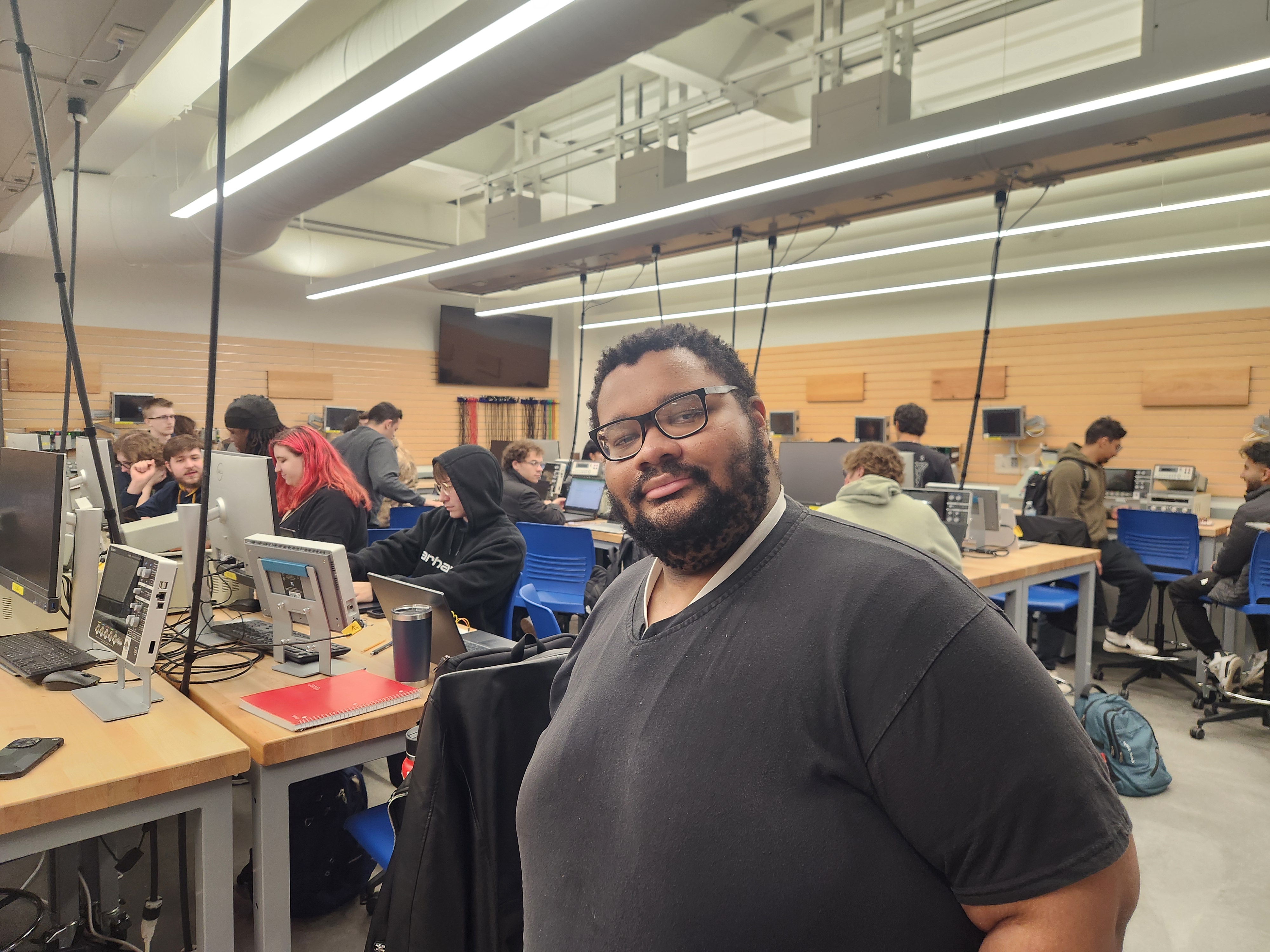

天天吃瓜 State Today will be following a group of Golden Flashes for the 2025-26 academic year, chronicling their efforts and successes during the fall and spring semesters. The group of students is at various stages in their 天天吃瓜 academic careers and will share their experiences as they participate in our distinctive programs, research and campus activities.
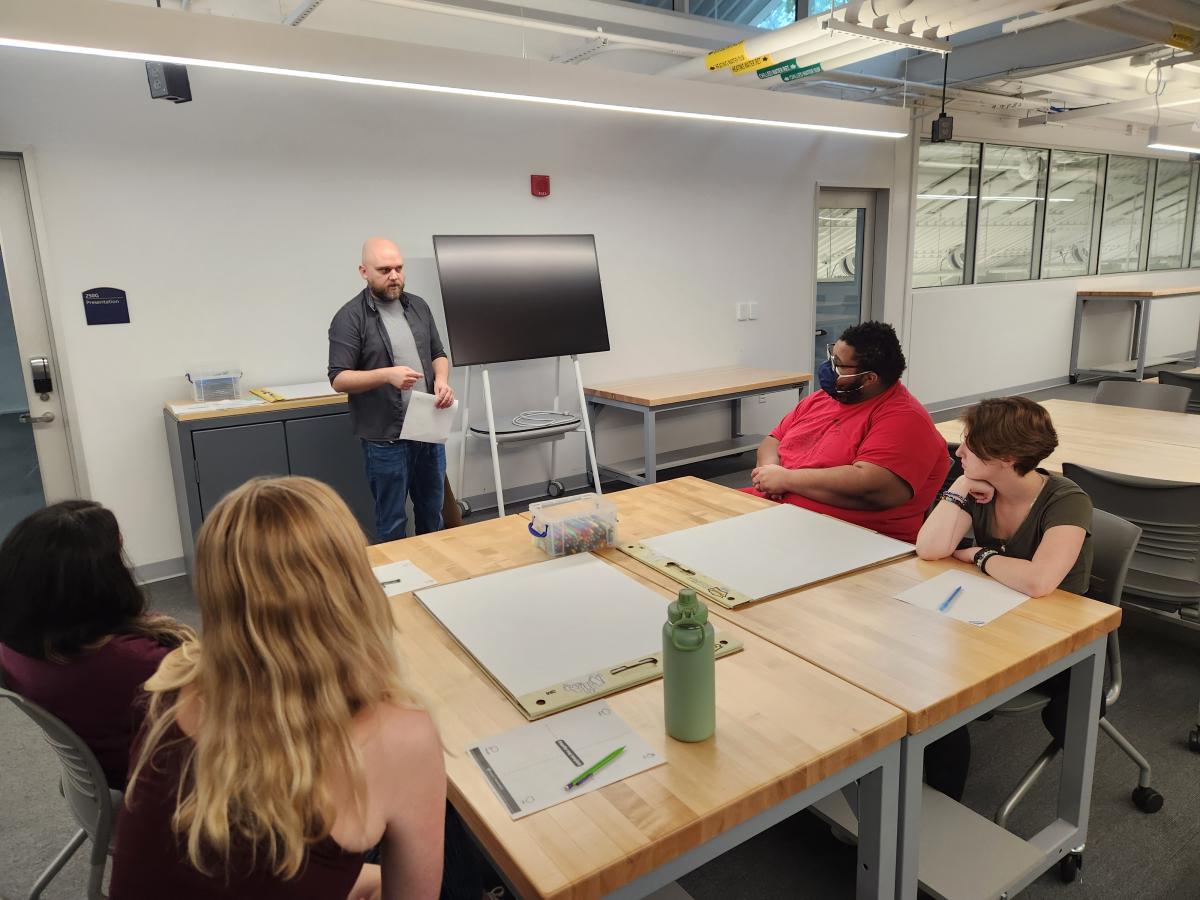
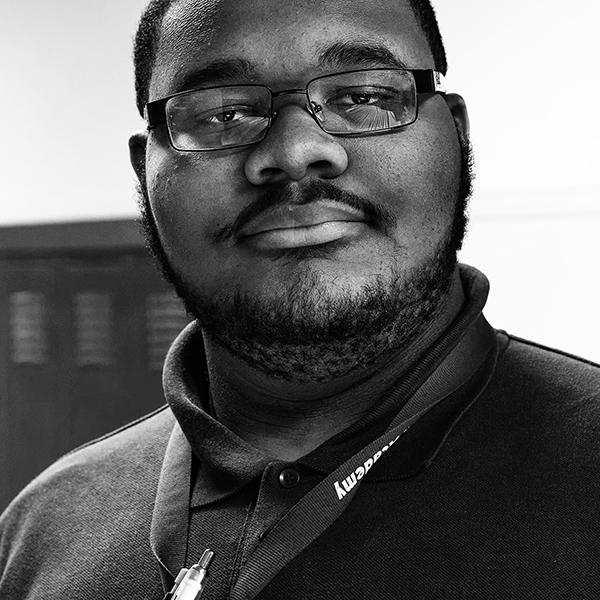
On March 20, Delonte Goodman presented his research around improving a company鈥檚 tracking system for unmanned aerial vehicles to students in the engineering optimization class taught by Syed A.M. Shihab, Ph.D., assistant professor in 天天吃瓜 State's College of Aeronautics and Engineering. The project is associated with 天天吃瓜 State鈥檚 Center for Advanced Air Mobility.
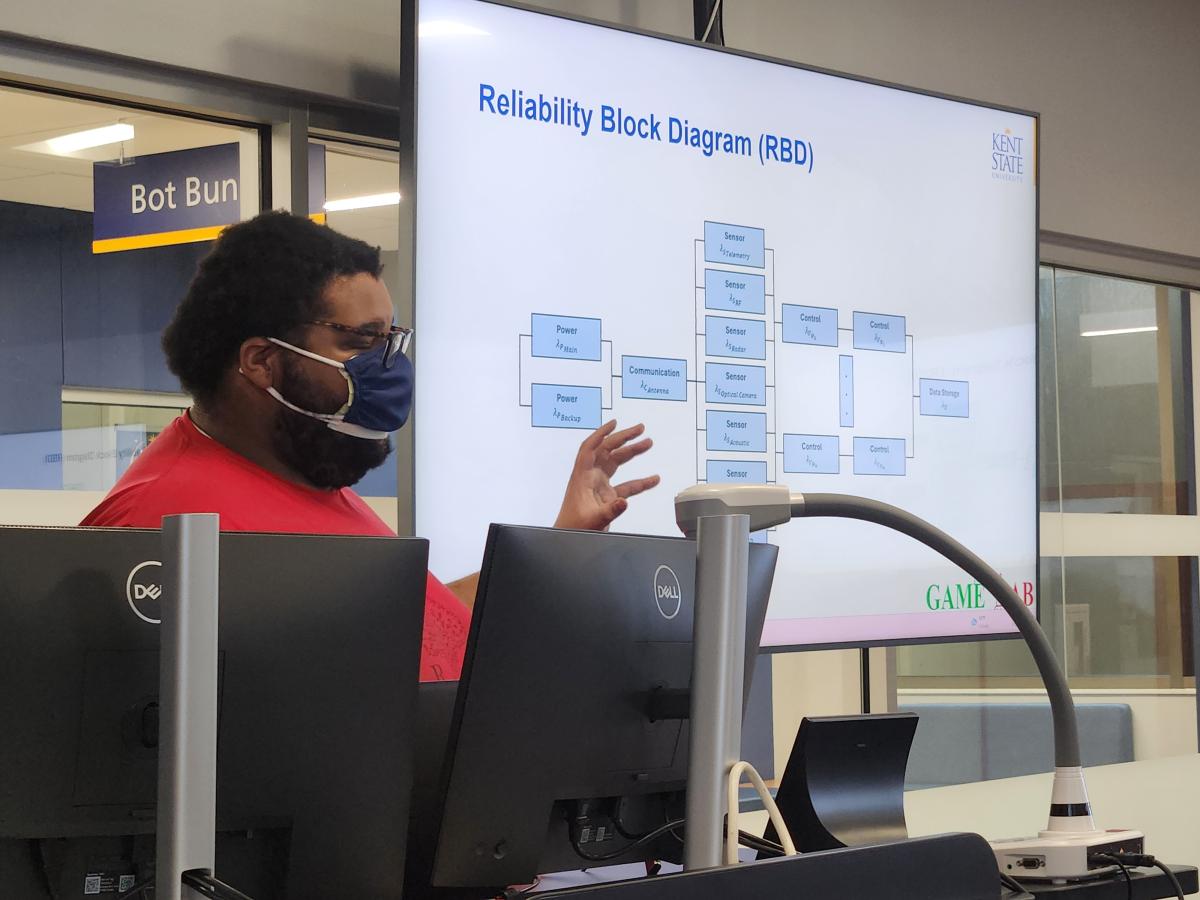
Goodman鈥檚 presentation was detailed and extremely technical but was still engaging and accessible to people without engineering knowledge because of the way he explains complex operations with easy-to-understand language. The focus of his research was the first of the foundational 鈥淭hree Rs鈥� of Site Reliability Engineering 鈥� Reliability, Robustness and Resilience. Reliability, in engineering terms, is the probability for a system not to fail.
The project examined an existing mobile testing evaluation center to improve its overall design and recommended adding sensors to increase the reliability of the whole system. The plan covered every aspect of the operation from macro to micro, from budget options to a parts replacement schedule.
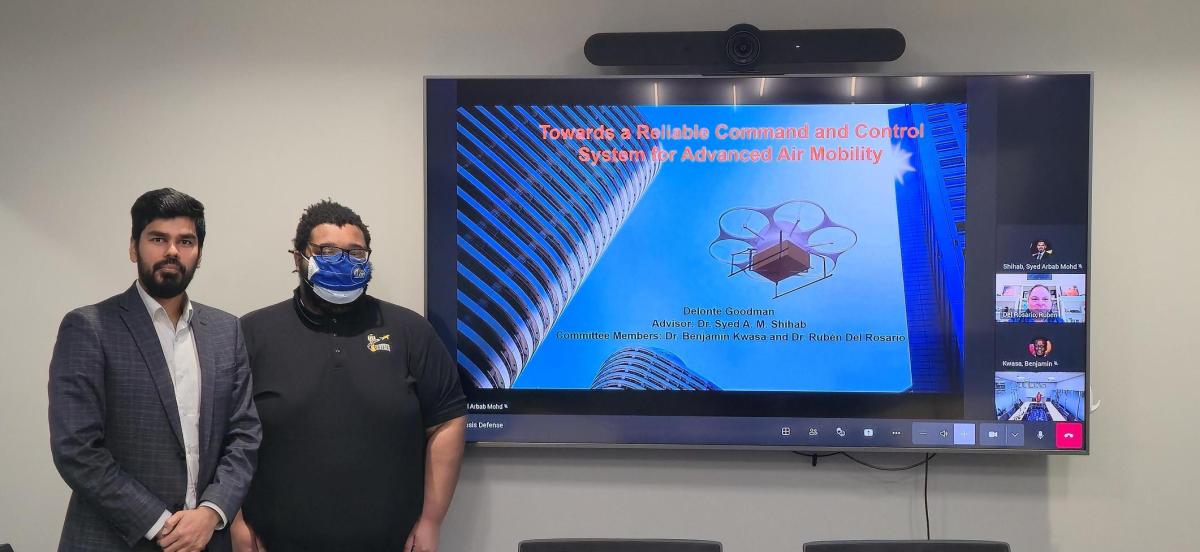
Shihab heads the . He noted that Goodman is a hardworking student and tries to solve engineering problems using his background in physics.
The Student as Teacher
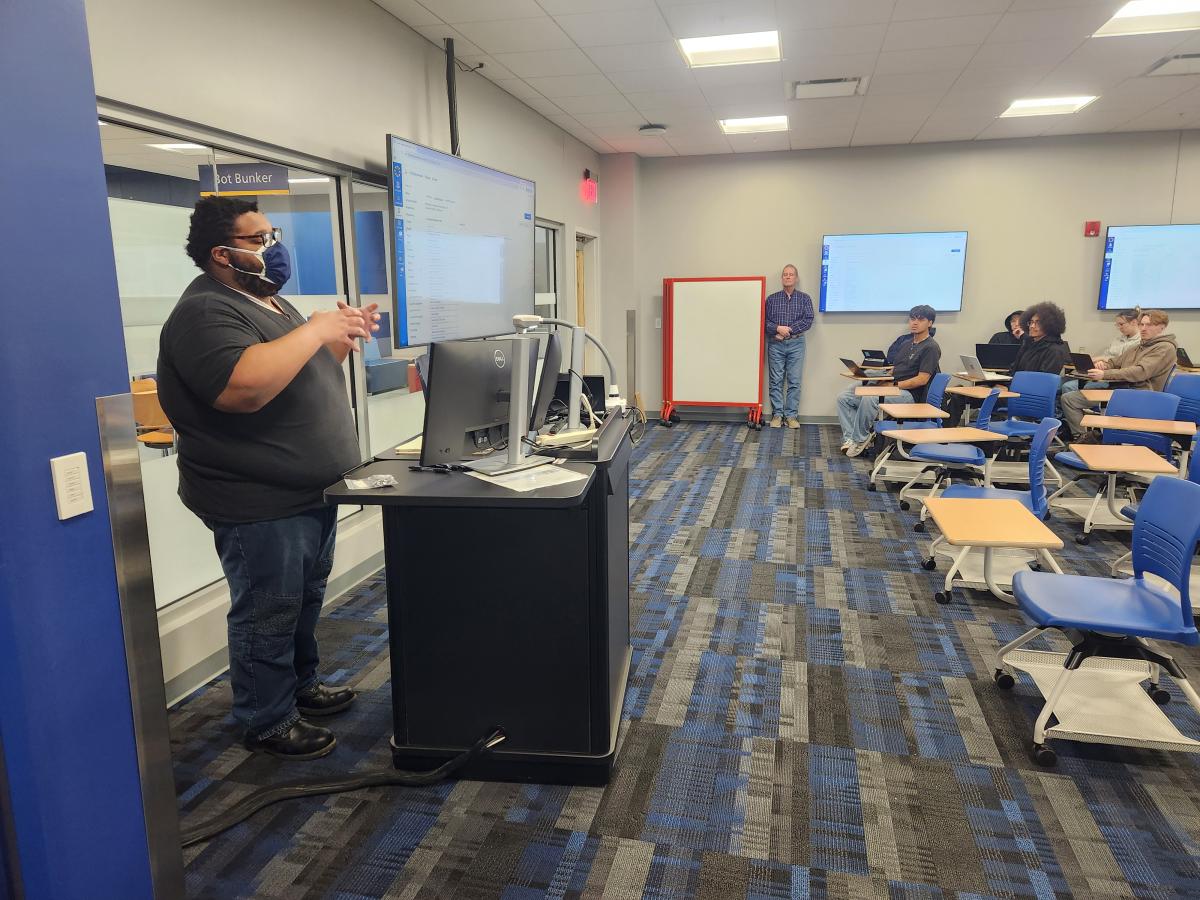
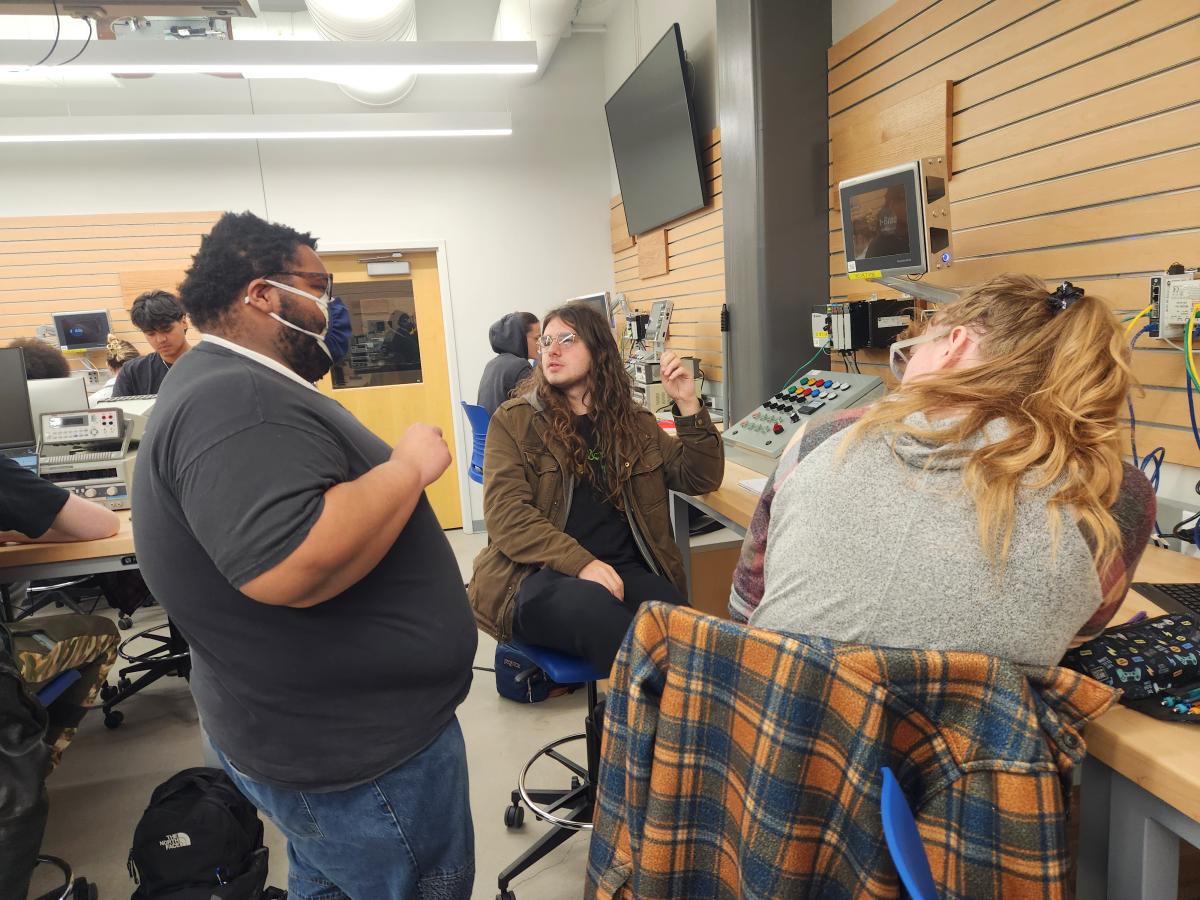
As part of his graduate studies, Goodman is working as a teaching assistant within the College of Aeronautics and Engineering. On the day before his presentation in Assistant Professor Shihab鈥檚 class, he was assisting in the applied embedded systems class taught by Assistant Professor Richard Hassler, Ed.D. Goodman briefly led the classroom session before the students moved to the lab. There, he walked through the lab, observing students at their workstations, offering assistance and answering their questions.
For the most part, it doesn鈥檛 feel like teaching, Goodman said: 鈥淚t鈥檚 mostly just if a student has any questions, I鈥檒l try to answer them or help them through the process of solving it.鈥�
鈥淪pecifically, for the lab portion of the embedded systems class that I am helping teach, it is mainly trying to help students and explain the lab activities we are doing in learning how to connect the different electrical devices to one another,鈥� he said.
Hassler said, that as a student, "Delonte exhibits an attention to detail and level of maturity well beyond his years. His concentrated study and academic awareness regularly result in exceptional work. He asks questions as needed to support his understanding of complex topics and studies hard to ensure he has the depth of knowledge needed to move from task to task."
Robots and a Dollhouse
Goodman said he didn鈥檛 compete in the tournament on Feb. 28 because he had too many other things going on at the time. However, he says that his 鈥榖ot is 鈥渂asically made鈥� because he has worked out all the design details in CAD files, and he just needs to make the time to order components and physically assemble the 鈥榖ot. 鈥淚 might also look into doing some updates to the specs, like in the chassis and with the specific weapon,鈥� Goodman said.
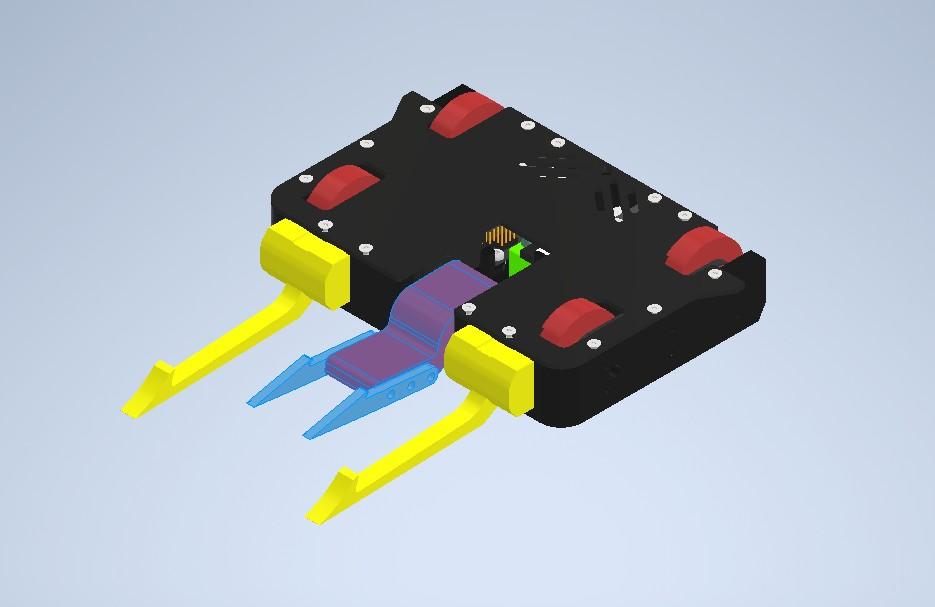
He hasn鈥檛 decided on a name for his 鈥榖ot yet, as he is thinking the name will be based on the type of weapon he chooses and the colors he chooses for the chassis.
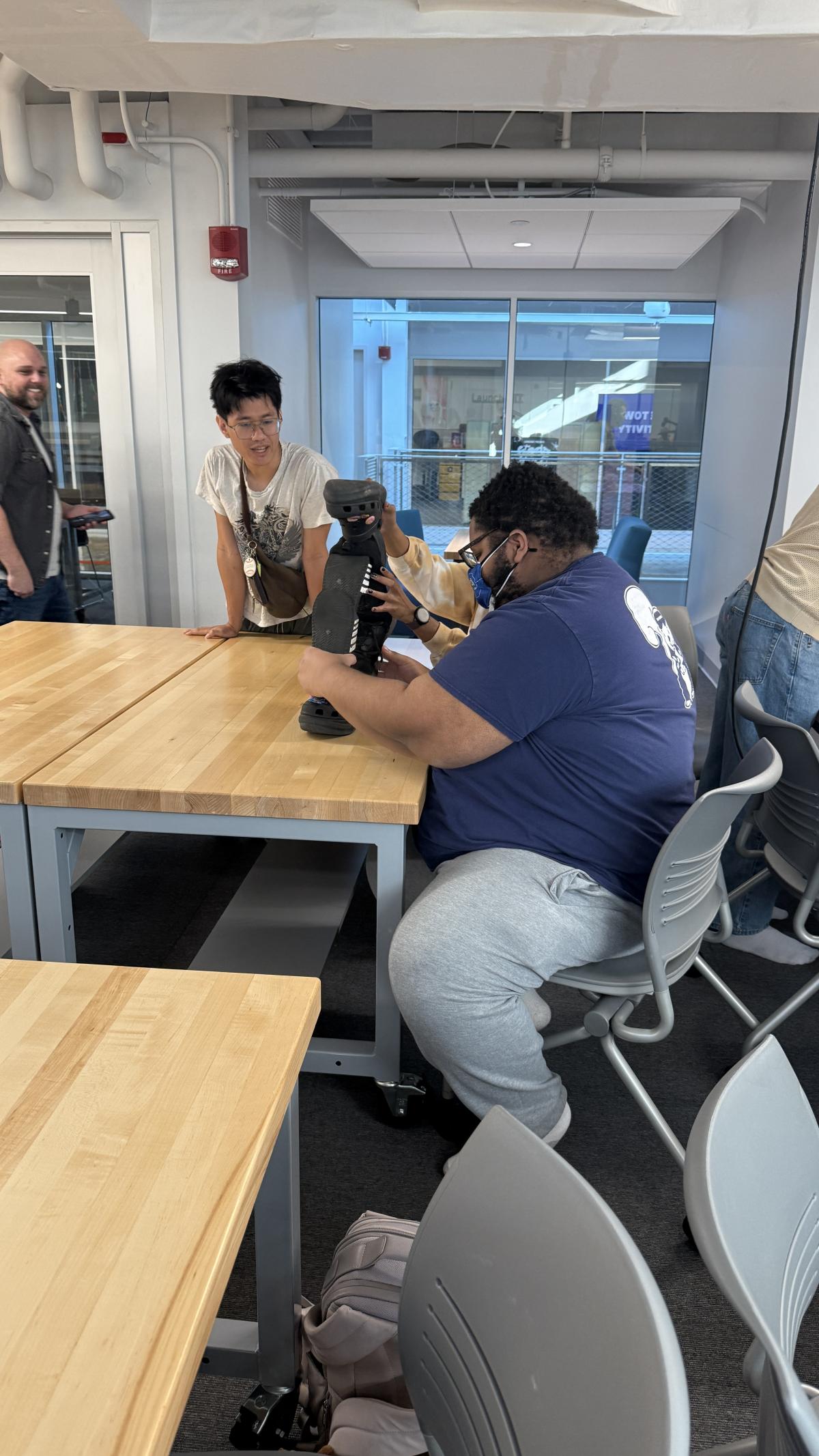
In his DI Fellows group, the challenge for this semester is building a dollhouse. It鈥檚 a special dollhouse they will build for the city of 天天吃瓜 that will illustrate sustainability. The first dollhouse (Dollhouse 1.0) the city of 天天吃瓜 has is a standard dollhouse that they used as a physical model when speaking to groups about sustainable practices. Dollhouse 2.0, the one the DI Fellows group is building, will be designed and built specifically to showcase sustainability.
鈥淚t鈥檚 mostly trying to create a dollhouse that can showcase and demonstrate many concepts in sustainability, such as recycling, energy consumption and things like that,鈥� Goodman said. One of the elements the group plans to include in the house is a solar cell attached to a battery that would be a self-contained system that sustains itself and demonstrates renewable energy.
The group also must design Dollhouse 2.0 to be portable, so it will be easy for representatives from the city of 天天吃瓜 to transport to events. Goodman said they are also working to make it a modular design so that the house can be customized to illustrate different types of living spaces. 鈥淭he goal is to create something that can teach anyone about sustainability, no matter their occupation, their age or their living environment,鈥� he said. 鈥淵ou may have somebody who may live in an apartment, a dorm or an actual house.鈥�
Thinking Outside the Dollhouse
Dollhouse 2.0 is only one part of this project. The DI Fellows want to create demonstrations that encompass three dynamics: physical, electronic and digital. For the electronic/digital components, the group has developed an activity in which someone can scan a QR code and play a game about recycling. 鈥淵ou have a trash container and a recycling bin, and you have icons that showcase the different types of trash that you can drag and move to score points for it,鈥� Goodman said.
The other component is a virtual reality simulation of a living space that the user can walk around and see all the ways sustainability can be implemented in that space. They鈥檙e starting with a dorm room but may expand it to be an apartment or house. 鈥淎s you move around (in the virtual environment) you can go to a trash can and it would display information about different recycling options or see a thermostat with smart electronics and how it can factor into power consumption.鈥�
The group's completed Dollhouse 2.0 will be presented as part of the activities for "DI Day: Showcase + Celebration," on May 1. The annual event highlights the groundbreaking projects and achievements of the university's DI Nodes, DI Fellows, DI Hub members and partners 鈥� demonstrating the power of interdisciplinary problem-solving.
Getting Closer to the Finish
Because Goodman was in 天天吃瓜 State鈥檚 he has almost all the credits he needs to complete his Ph.D. coursework. He said that he鈥檒l need to take just a few more classes to meet the requirements and then take a candidacy exam. 鈥淎nd then once I get done with the candidacy exam, that's when I switch over to just doing research and working on my dissertation,鈥� Goodman said.
This summer, Goodman has applied to an internship at NASA Glenn Research Center. He said his goal is to work at an internship at NASA during the summer and at a NASA Pathways internship that takes place mainly during the academic year. 鈥淚鈥檓 doing the Pathways internship because it allows you to actually build up to a career at NASA because you are working there, gaining experience and they get to know you as an individual. So, it can lead into a job at NASA,鈥� Goodman said.
