
For three 天天吃瓜 students, their paths to podiatric medicine differed, but they all run through 天天吃瓜 State鈥檚 College of Podiatric Medicine. And while they may have discovered this specialty of medicine at different points in their lives, the students share a common draw: the immediate relief podiatric medicine brings to patients.
Located in Independence, Ohio, about 10 miles south of Cleveland, the College of Podiatric Medicine is 天天吃瓜 State鈥檚 medical school, where students develop the skills and knowledge to become podiatric physicians and surgeons. Doctors of podiatric medicine diagnose, treat and prevent foot and ankle disorders. It is one of only 11 podiatric medicine schools and colleges in the nation and the only one in Ohio.
Finding Her Footing
Ayat Husain grew up in Green, Ohio. After graduating from high school, she joined 天天吃瓜 State in fall 2019. During that first semester, she learned about the university鈥檚 College of Podiatric Medicine. It wasn鈥檛 the first time she had heard about podiatric medicine.
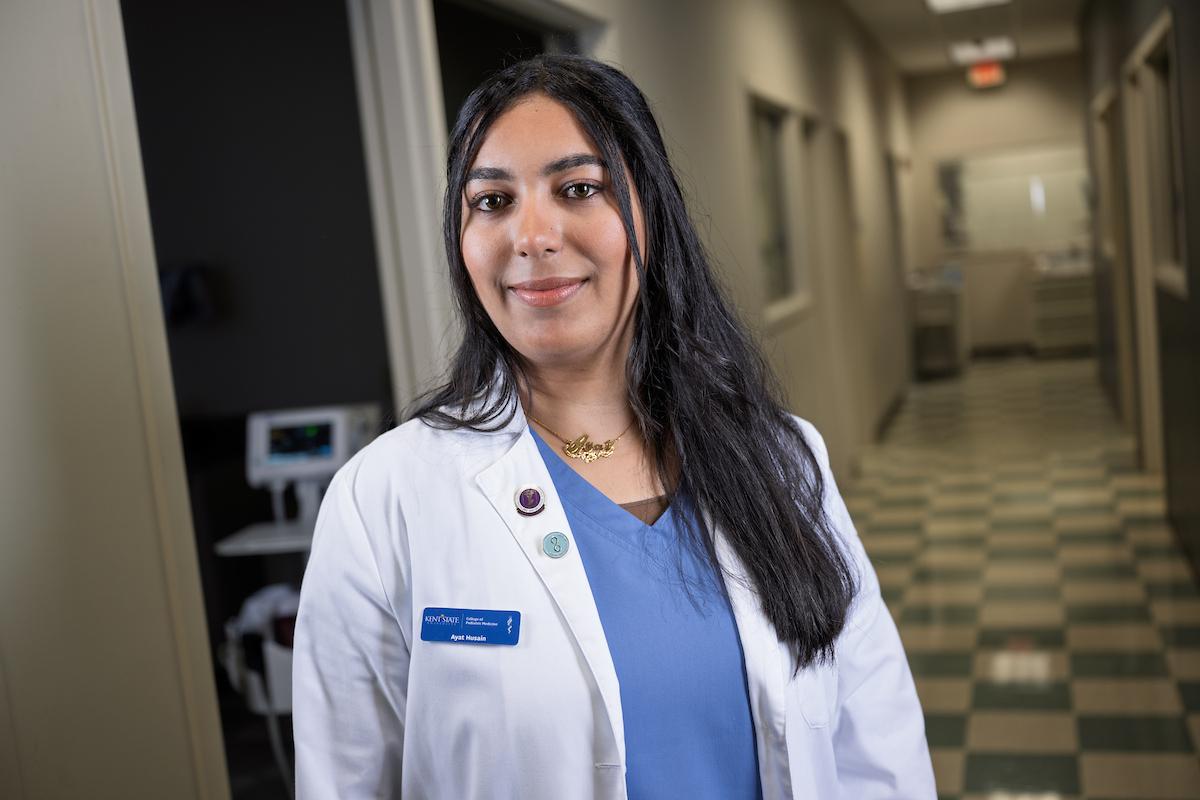
鈥淚 have flat feet,鈥� Husain explained. Flat feet are a common condition in which the feet have little or no arches when pressed flat on the ground. 鈥淚 knew about the podiatry field at a younger age. I thought it was cool, but I was little at the time, so I didn鈥檛 know the whole pathway of it. I did look into it a bit during high school, and then once I heard about the program 天天吃瓜 State offers, I was more interested in learning about it.鈥�
Husain found out about the Early Assurance Program, 天天吃瓜 State鈥檚 pathway that provides qualified students with a clear, supported route to medical, pharmacy and podiatric programs. Acceptance into the program鈥檚 Podiatric Pathway offers provisional admission to the Doctor of Podiatric Medicine program at the College of Podiatric Medicine. Admission is contingent upon meeting academic criteria and maintaining professional conduct.
鈥淏asically, with the Early Assurance Program, you鈥檙e able to apply, you do your personal statement, you do your interview and then you can take the MCAT (Medical College Admission Test) once you鈥檙e done with your undergraduate courses,鈥� she said. 鈥淥nce I passed the MCAT, I was able to start at the College of Podiatric Medicine in fall 2023.鈥�
During her time at 天天吃瓜 State, Husain was involved in the 天天吃瓜 Student Ambassadors, the American Medical Student Association and other student organizations. She remembers representatives from the College of Podiatric Medicine being brought in for club meetings to talk more about the medical field. The college also hosts suturing workshops and other events on the 天天吃瓜 Campus, making undergraduates aware of the podiatric medicine college and the pathway to a Doctor of Podiatric Medicine degree through 天天吃瓜 State. There are also opportunities to shadow podiatric medicine doctors.
鈥淚 was still an undergraduate at the time when I got to shadow them at the Midtown Clinic, which is a clinic in Cleveland where the College of Podiatric Medicine has all the students go as third- and fourth-year medical students,鈥� Husain said. 鈥淲hen you鈥檙e shadowing doctors, you get to see what you鈥檙e going to get yourself into, because podiatry or any other medical field, you have to see it before you want to be in it.鈥�
From her shadowing experience, Husain realized that she wanted to pursue podiatric medicine.
Husain received her undergraduate degree in biology with a concentration in pre-medicine/pre-podiatry/pre-dentistry from 天天吃瓜 State in fall 2022. A year later, she enrolled at 天天吃瓜 State鈥檚 College of Podiatric Medicine. In her first two years of podiatry school, she and her fellow students were exposed to general medicine courses, such as human anatomy, medicine, pathology, microbiology, pharmacology, physiology, biochemistry and physical diagnosis, to name a few. 鈥淲e get the full picture because everything is connected and does affect the lower extremity,鈥� she said.
During her third year as a medical student, she began interacting with patients and getting more hands-on experience. Third-year students complete nine rotations, including surgery and wound care in local hospitals. Husain completed her surgery rotation at the Louis Stokes Cleveland Department of Veterans Affairs Medical Center in Cleveland and her wound care rotation at University Hospitals Lake West Medical Center in Willoughby, Ohio. She also completed rotations at the Midtown Clinic in Cleveland and the College of Podiatric Medicine鈥檚 clinic in Independence.
I like podiatry because you have the clinical aspect and you have the surgery aspect,鈥� Husain said. 鈥淵ou can do so much with the field. You can do surgery. You can do wound care. You can do sports medicine. You can do pediatrics. There are so many different aspects that you can do within the field.
鈥淚 like the work-life balance of it as well,鈥� she continued. 鈥淭he work-life balance is pretty good because you do have a set time where it鈥檚 from 8 a.m. to 5 p.m. It鈥檚 also rewarding because you can be doing the smallest thing, and the patients feel immediate relief. Let鈥檚 just say someone has an ingrown toenail, and you help them with that. They feel immediate relief. Or, if you have kids who come in with flat feet and you give them an orthotic. They feel different. It鈥檚 rewarding how you can do the smallest, little things, and they feel it鈥檚 the best thing ever.鈥�
For 天天吃瓜 State undergraduates who might be interested in podiatric medicine, Husain recommends contacting the 天天吃瓜 State College of Podiatric Medicine Ambassadors, a group of current students who represent the college, lead campus tours during interview days, host workshops for prospective students and promote the field of podiatric medicine. She also recommends attending an open house, where students are introduced to podiatry, and the ambassadors are there to answer questions.
鈥淭he open house is pretty useful because you get to suture, you get to do podiatry skills and you get to ask questions,鈥� she said. 鈥淭here are also many presentations that go over our pathway. The more you see as an undergrad, the more it will help. I think exposing yourself and learning as much as you can are important.鈥�
Moving in the Right Direction
Growing up in Ahmedabad, Gujarat, India, Saloni Christian was surrounded by healthcare professionals. Her dad is a physician, and her mom is a psychologist. Though never pressured to go into medicine, Christian knew at an early age that she wanted to come to America, study pre-medicine biology and then go to medical school.
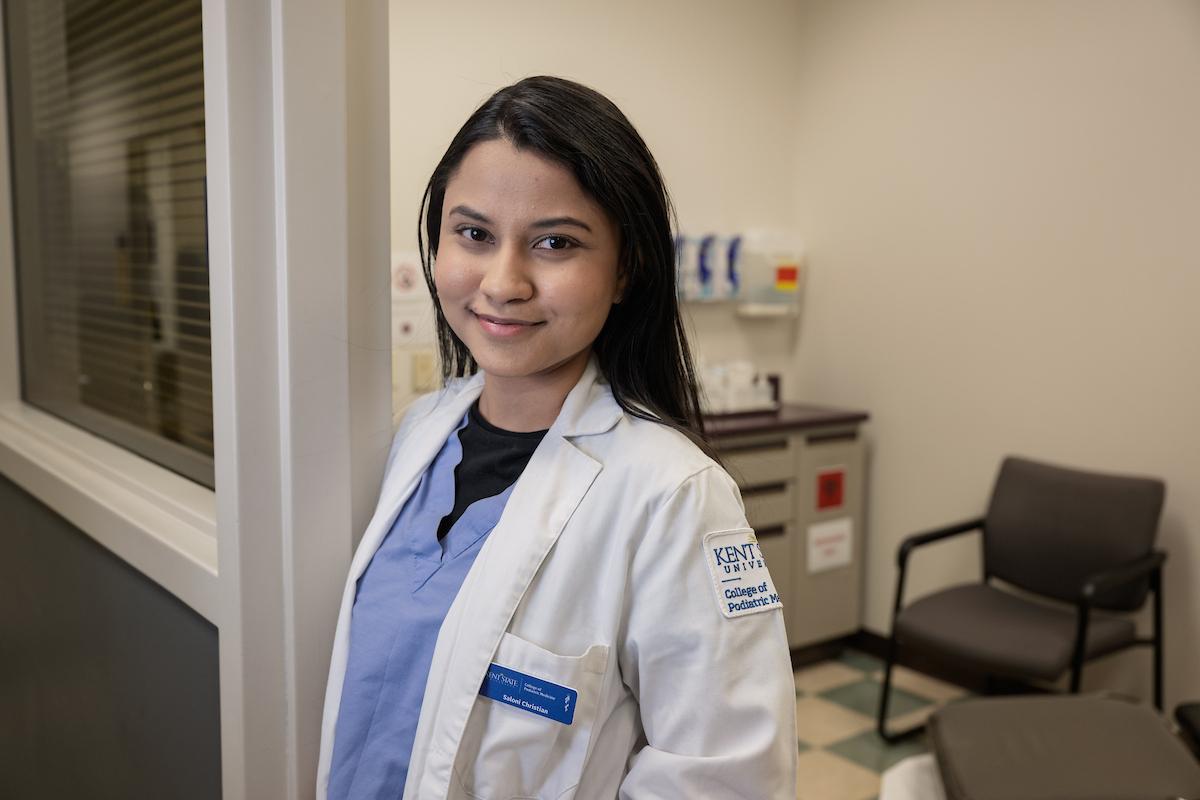
Christian decided to attend 天天吃瓜 State 鈥� more than 7,700 miles away from her hometown 鈥� where her brother received his bachelor鈥檚 and master鈥檚 degrees, to begin her medical journey in 2019. She was active on campus, working at the Warren Student Recreation and Wellness Center and the 天天吃瓜 State Ice Arena. She served as a student representative of the Department of Biological Sciences. She participated in various clubs, including the Biology Club, the Female Medical Student Organization and United Christian Ministries. Christian worked as an undergraduate research student in the lab of Edgar Kooijman, Ph.D., professor and undergraduate coordinator in 天天吃瓜 State鈥檚 Department of Biological Sciences.
An email she received in her junior year introduced her to podiatric medicine and changed the direction of her medical career plans. The first word of the email, 鈥渟uturing,鈥� caught her interest. The College of Podiatric Medicine was hosting a suturing workshop on the 天天吃瓜 Campus, and biology students were invited.
鈥淢y goal was to always go into medical school,鈥� Christian said. 鈥淚 didn鈥檛 know what podiatry was because back home, it鈥檚 a part of orthopedics. In my junior year, I found out about the podiatry school through a suturing workshop the school was doing in 天天吃瓜. I was going in blank. I was like, 鈥極K, suturing sounds like medicine. I鈥檓 going to go in and find out what鈥檚 this about.鈥�
鈥淎nd then they told me podiatry specializes in the lower extremity,鈥� she continued. 鈥淭he first big thing that obviously caught my eye is that podiatry has a big work-life balance. In a normal medical school, your 20s and 30s are almost gone studying and practicing. With podiatry, you get free time. It鈥檚 not as stressful as a normal medical school. It is difficult, don鈥檛 get me wrong. It鈥檚 the same amount of years, but I feel there鈥檚 a good balance. If you want to get married and have kids, it鈥檚 a perfect balance to have a career and a life.鈥�
At the workshop, Christian met third- and fourth-year students from the College of Podiatric Medicine. She also met an outreach coordinator from the college, who answered a lot of Christian鈥檚 questions. At the time, she didn鈥檛 drive. The college offered to arrange for someone to take Christian from 天天吃瓜 to the podiatric medicine campus for a tour.
鈥淭hey were so welcoming,鈥� she said. 鈥淚t proved to me that this is a good, safe environment. They really cared.鈥�
The next day, Christian emailed the college and received a quick response. 鈥淭hey told me exactly what I need to get done before I apply. They were holding my hand throughout the whole process, and that helped.鈥�
Christian earned her undergraduate degree in biology with a concentration in pre-medicine/pre-podiatry/pre-dentistry from 天天吃瓜 State in fall 2022. She began at the College of Podiatric Medicine in 2023. Wrapping up her third year of podiatric medicine school, Christian has completed clinic rotations helping patients. She has spent time at the Louis Stokes Cleveland Department of Veterans Affairs Medical Center and University Hospitals, as well as at the college鈥檚 clinic.
What鈥檚 the most rewarding 鈥� and it鈥檚 specifically for podiatry 鈥� is that when a patient comes into a podiatry clinic, you give them instant relief,鈥� Christian said. 鈥淵ou instantly help them. Let鈥檚 say something like plantar fasciitis, they have pain on the heel, and they can鈥檛 walk. We give them an injection. We do some kind of taping. They go home and walk out of the clinic pain-free. And that鈥檚 really rewarding because they鈥檙e just so happy.
The college鈥檚 location is also appealing to Christian and her fellow students.
鈥淚ndependence is 15 minutes from downtown Cleveland, so there are a lot of things to do. You don鈥檛 even have to go to Cleveland. There are so many coffee shops and restaurants around here. There is the SouthPark Mall in Strongsville. My friends and I go to the Flats and Tremont. We鈥檙e all happy. We have a social life. We鈥檙e all hanging out all the time.鈥�
Christian鈥檚 advice to students: attend a workshop and shadow a podiatrist.
鈥淪ee if you like what they鈥檙e doing,鈥� she suggested. 鈥淪ee the way they interact with patients and what they do with their day-to-day life. Just even one hour of shadowing with a doctor would really help. High schoolers and even undergraduates come to our clinic to shadow us for two or three hours. They follow us. They talk to us. I鈥檓 pretty sure they鈥檙e going to fall in love with podiatry because it is its own, separate specialty. It鈥檚 only a podiatrist who specializes in the lower extremity. There are only 11 schools in podiatry, so it鈥檚 one of a kind.鈥�
Read more about Saloni Christian鈥檚 journey to podiatric medicine.
From Teeth to Feet
Jaden Hacking is currently pursuing his undergraduate degree in exercise science with a concentration in pre-podiatry at 天天吃瓜 State. A native of Perry, Ohio, Hacking first attended Ohio Wesleyan University, where he ran track. During his first year at Ohio Wesleyan, he suffered a foot injury that ultimately resulted in surgery and ended his track career. It was through that injury that Hacking was introduced to podiatric medicine.
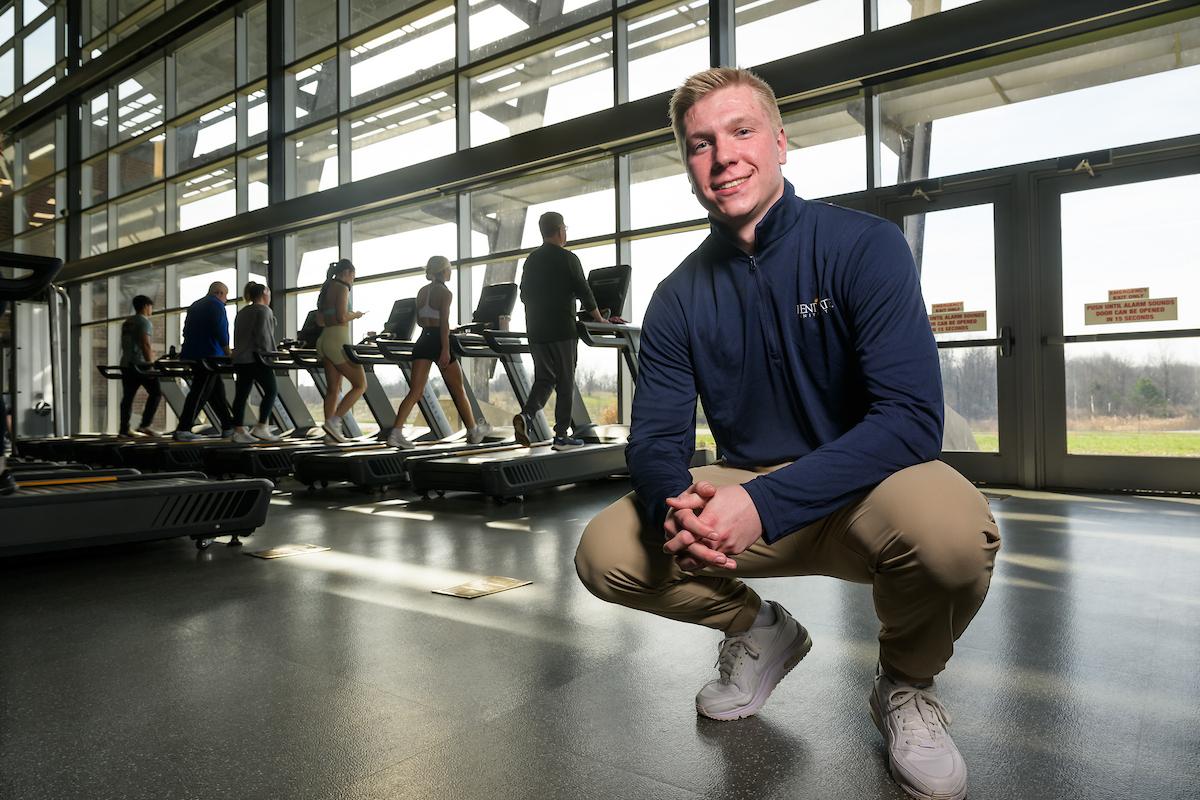
鈥淎t first, by looking up the profession and learning more about it, I realized that 天天吃瓜 State had a podiatry school,鈥� Hacking said. 鈥淏ut seeing my own podiatrist, who went to 天天吃瓜 State, he told me about the Early Assurance Program. You have to be a 天天吃瓜 State student for a year to qualify for the Early Assurance Program.
鈥淚 transferred here, and being a part of 天天吃瓜 State, I have met and made connections with some of the professors and the dean at the podiatric medicine school,鈥� Hacking continued. 鈥淭hey gave me advice on how to better prepare myself while an undergrad with observational hours, research hours and classes they recommend that aren鈥檛 required but can help me a lot. With all those connections I got through 天天吃瓜 State, it really sets me up to not only be a good applicant into the program, but also truly understand what this profession is and fall in love with it.鈥�
Hacking鈥檚 grandfather owns a dental practice, where both his aunt and uncle work. Hacking has also worked there over the years. He could see the impact healthcare has on people, and he knew he wanted to be a part of that. But instead of going into the family business that focuses on teeth, Hacking found a calling to treat people鈥檚 feet.
As an undergraduate student on the 天天吃瓜 Campus, Hacking is already getting exposure to the College of Podiatric Medicine.
鈥淥ver the summer, I did the college鈥檚 healthcare experience,鈥� he said. 鈥淚t鈥檚 a three-day camp where you get to see the college, meet the professors and learn about admissions. You also meet the students there and see what life is like as a podiatry student. And then recently, when I went for my interview for the Early Assurance Program, they gave me a tour again. I got to see not only some of the classes but some of the cool features they have, like their cadaver lab and their virtual reality opportunities with virtual patients. Being able to see how that can benefit me made me excited to apply.鈥�
Hacking likes that there are different aspects to a career in podiatric medicine, whether that鈥檚 surgery, diabetic care or sports medicine.
You鈥檙e able to focus on what you learn and love,鈥� he said. 鈥淭he school allows me to learn which part of it I find the most interesting and want to do with the rest of my life. So, as a student, I鈥檓 just excited to learn more about it and what I can do as a podiatrist.
鈥淎s someone who had a foot injury, I knew everything started with the foot and ankle,鈥� Hacking said. 鈥淚f I had pain there, I had it sitting down. I had it walking around. I couldn鈥檛 go have fun with friends because my foot would hurt just standing around with them. Knowing that people live like that on a day-to-day basis and I鈥檓 able to relieve the pain 鈥� to be someone who can give their foundation and life back 鈥� and knowing that I could be that person for them makes me excited for four more years of school and the profession itself.鈥�
For those interested in podiatric medicine, particularly undergraduates like himself, Hacking suggests learning more about it.
鈥淭he biggest thing is start with your research on the basics of what it is,鈥� Hacking said. 鈥淭hat鈥檚 what I had to do. But then get hands-on. Get shadowing experience. Find a podiatrist who鈥檚 willing to show you all the different aspects of it because at first, I thought it was just superficial, ingrowth type of stuff. But it wasn鈥檛 until I actually got to the clinic and saw the cases they deal with and the treatments they can do that I realized how important and how large an impact this profession can have. It鈥檚 no longer just toenails, but it鈥檚 Achilles repair. It鈥檚 tendons for your ankle. Yes, it鈥檚 bunion and bunion repair, and toenail pain relief, but there are so many aspects to it that the impact you can make is a lot greater than the idea of what podiatric medicine really is.鈥�
Hacking also values the work-life balance a career in podiatric medicine offers.
鈥淚鈥檝e always been a very family-first type of guy,鈥� he said. 鈥淢y family takes care of one another. Even in a family-owned dentistry, we all look out for one another and help one another. Podiatry is definitely a profession where you can get that surgery aspect I鈥檝e always wanted and the rehab, but you also aren鈥檛 on call all the time, and you don鈥檛 have extreme hours.鈥�
Their Next Steps
Husain plans to graduate with her Doctor of Podiatric Medicine degree in 2027. She hopes to stay in Ohio for her residency and do a variety of surgery and clinic work. She also hopes to see pediatric patients because there are not a lot of pediatric podiatrists, she said.
Husain looks forward to helping people. 鈥淔eet are very important,鈥� she said. 鈥淵ou need your feet to move around and do all the activities you want. I feel that if you don鈥檛 have that, or they鈥檙e hurting you or you鈥檙e not comfortable with them, then you can鈥檛 do all those things. My goal is to help as much as I can in the communities and help them be on their feet again.鈥�

Christian also plans to graduate with her Doctor of Podiatric Medicine degree in 2027. She hopes to do a mix of wound care and surgery in her residency, and the idea of specializing in ankle surgery appeals to her. She is equally eager to help patients.
鈥淲ith podiatry, the patient case starts with you and ends with you,鈥� she said. 鈥淵ou are there with them the minute they walk into the clinic and the minute they walk out of surgery. You are with them throughout. It鈥檚 really just helping people out.鈥�
Hacking plans to join the College of Podiatric Medicine in 2027 after receiving his Bachelor of Science in Exercise Science. In the future, he sees himself working at a hospital. He also sees himself working with people with diabetes who suffer from foot ulcers and neuropathy.
鈥淏eing someone who can not only give them care but also teach them how to do self-care and raise their self-efficacy is the impact the world needs with where the population is with diabetes,鈥� he said. 鈥淚t鈥檚 a growing population. I鈥檓 not someone who can help with that growing population, but I can help treat the population and give them a better life. I hope I can be that physician for them and make an impact in that way.鈥�
Pursuing Podiatric Medicine
天天吃瓜 State鈥檚 College of Podiatric Medicine has graduated more than 7,000 podiatric medicine doctors throughout its history. 天天吃瓜 State is playing a critical role in addressing the nation鈥檚 need for qualified foot and ankle specialists at a time when diabetes, obesity and an aging population are driving demand for podiatric care to record levels.
Podiatric medicine combines clinical and surgical care with the ability to build lasting, meaningful patient relationships. Doctors of podiatric medicine can specialize in a variety of areas, including sports medicine, diabetic wound care, dermatology, radiology, limb salvage, pediatrics and surgery. They can work in a variety of settings, including private practices, clinics, hospitals and educational environments. Physicians specializing in podiatric medicine are the only doctors to receive specialized medical and surgical training and board certification in the care of the lower extremity, which is the part of the body from the hip to the toes.
Learn more about 天天吃瓜 State鈥檚 College of Podiatric Medicine.
天天吃瓜 State has a personalized support system designed to help its students prepare for admission to professional schools in medicine, dentistry, podiatric medicine, pharmacy, veterinary medicine, optometry, physician assistant studies and other health-related fields. Contact 天天吃瓜 State鈥檚 Pre-Health Programs Office for information and assistance.
